Programs and instruments offered
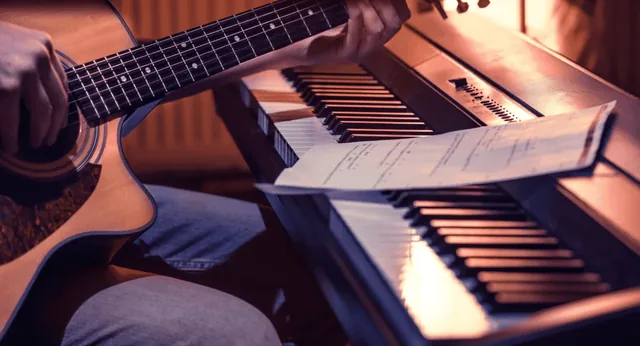
Music schools in India teach a wide span of instruments and vocal disciplines, often under the same roof. Western instruments include guitar (acoustic, electric, classical, bass), piano and keyboard, drums, violin, ukulele, and increasingly DAW-based production. Indian classical training covers Carnatic vocal, Hindustani vocal, sitar, sarod, flute, tabla, and mridangam — each with a structured raga-based syllabus and disciplined practice rituals.
Western classical vocal and choir training is offered at conservatory-style schools, with curriculum aligned to Trinity College London or ABRSM grading. Western popular vocal coaching (pop, rock, R&B, musical theatre) is increasingly common, especially in metros.
Formats range from group beginner batches (3-6 students, ideal for kids picking up an instrument for the first time) to one-on-one private lessons (preferred for serious students and exam prep). Many schools also offer ensemble or band programs where students play together — a valuable counterpart to solo practice. Online lessons over Zoom or Skype have become widely available, sometimes paired with in-person monthly meet-ups for performance feedback.
How to choose a music school
Pick the school by the depth of teaching in your chosen discipline, not the breadth of its offering. A guitar-specialist studio with a single great teacher often beats a multi-instrument school where guitar is taught by whoever's free. Verify the teacher's performance background — actively performing teachers usually keep their technique sharp and have stage-context advice that purely-academic teachers don't.
If you or your child plan to take graded exams, confirm whether the school prepares students for Trinity, ABRSM, Rockschool, or AKM and what their pass rate looks like. Group lessons are cost-effective for absolute beginners; switch to private lessons by Grade 2-3 so progress isn't bottlenecked by the slowest student in the batch.
Ask whether the school offers recitals, open mics, or band nights — performance time is essential to building stagecraft alongside technique. Check practice infrastructure: does the school provide instruments for classes, or do students bring their own? Are there practice rooms available between lessons? Confirm fee structure (term vs monthly), instrument-rental options, and exam-entry fees, which are billed separately by the examining board.
What to expect and common pitfalls
Realistic progression on most instruments: the first three months establish posture, basic technique, and the ability to play simple melodies. Six months brings comfortable single-line playing and basic accompaniment. One to two years enables intermediate-level Trinity or ABRSM grades for committed students. Vocal training follows a similar curve — by six months a student should hold pitch reliably and sing through one or two complete songs.
The most common pitfall is irregular home practice. Without 15-30 minutes of daily practice between lessons, weekly classes barely move the needle. Parents often underestimate this and switch teachers when the issue is really practice consistency. Another common mistake is starting kids on full-size instruments before they can physically handle them — half- and three-quarter-size violins, guitars, and shorter-scale ukuleles exist precisely for this reason. Adult learners frequently abandon classes within six months because they expected rapid progress and hit the technical plateau every musician experiences around the three-month mark.
Typical Indian-city fees: group lessons run Rs 1,500-3,500 monthly for kids, Rs 2,500-5,000 for adults; private lessons Rs 4,000-10,000 monthly depending on instrument and teacher seniority. Instrument purchase is a separate cost — entry-level guitars Rs 5,000-12,000, beginner keyboards Rs 8,000-25,000, exam-grade violins Rs 15,000-50,000. Exam fees to Trinity or ABRSM are Rs 3,000-8,000 per grade level.