
4.9
1/4
Obsession Dance Studio-Nibm
Kondhwa, Pune
Dance classes for all levels in Pune
Trial availableExperienced instructorsDance Choreography
162 reviewsMid-range
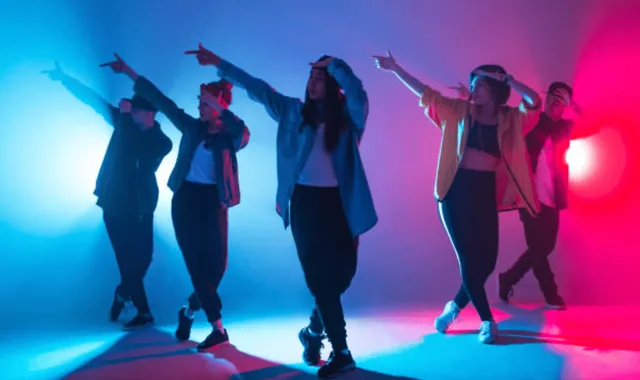
Compare 323 dance classes & studios across 66 Pune localities.
Area guide
321 dance classes in Pune offer indoor group batches.
Kondhwa, Pune
Dance classes for all levels in Pune
Kondhwa, Pune
Dance classes for all ages in Pune
Hadapsar, Pune
Dance education and performance at Obsession Dance Studio
Sangamvadi, Pune
Odissi Dance Classes in Pune
Viman Nagar, Pune
Dance classes and event choreography in Pune
Undri, Pune
Professional Dance Training Institute in Pune
Lonkar Nagar, Pune
Dance classes for all ages and styles
Hadapsar, Pune
Dance to Fitness studio in Pune
Hadapsar, Pune
Dance classes in Salsa, Belly Dance, Kizomba, and more
Koregaon Park, Pune
Salsa and Bachata Classes in Pune
Koregaon Park, Pune
Dance and Fitness Academy in Pune
Koregaon Park, Pune
Salsa and Bachata Classes in Pune
Undri, Pune
Dance classes and event choreography in Pune
Wagholi, Pune
Dance and Music Classes in Wagholi, Pune
Viman Nagar, Pune
Kathak dance classes in Pune for all ages
Viman Nagar, Pune
Bharatanatyam Classes at Nritya Pooja Academy
Karvenagar, Pune
Kathak training and interdisciplinary learning
Koregaon Park, Pune
Dance classes for all ages in Pune
Erandwane, Pune
Kathak dance training and certification in Pune
Hadapsar, Pune
Dance and Music Classes in Pune
Hadapsar, Pune
Dance Your Heart Out with Passionate Instructors
Wagholi, Pune
Discover the Joy of Dance in a Supportive Environment
Viman Nagar, Pune
Sencillo Salsa Dance Class in Pune
Wagholi, Pune
Dance classes for all ages in Pune
Classes in Pune
Classes in Pune
Classes in Pune
Classes in Pune
Classes in Pune
Indian dance studios offer a remarkably broad range — centuries-old classical traditions sit alongside global contemporary styles, often in the same studio. Bharatanatyam, Kathak, Kuchipudi, Odissi, and Mohiniyattam are the major classical forms, each with a structured syllabus of footwork (adavus or tukras), expression (abhinaya), and choreographed pieces leading toward an arangetram or solo debut.
Contemporary studios typically cover hip-hop, Bollywood, Western contemporary, jazz funk, and lyrical — built around technique drills, choreography pieces, and stage performances. Latin and ballroom (salsa, bachata, kizomba) lean adult-oriented with social practice nights. Zumba and dance fitness sit at the intersection of dance and exercise, with no choreography prerequisite.
Classes are usually grouped by age (kids 4-8, juniors 8-14, teens, adults) and level (beginner, intermediate, advanced, plus a separate performance batch for students preparing for shows or exams). Most studios run 60-90 minute sessions twice or thrice weekly. Some also offer intensive workshops, guru-led masterclasses, and certificate programs aligned to Trinity College London or similar syllabi.
Start by matching the style to your goal. Classical training is a long arc with deliberate technique work, while hip-hop or Zumba can show visible progress within weeks if your goal is fitness or fun.
Evaluate the instructor's lineage and performance record. Classical teachers should ideally have trained under a recognised guru and perform regularly themselves; contemporary instructors should have choreography credits or competitive backgrounds. Ask about the studio's performance pipeline — annual showcases, festivals, inter-studio competitions, and arangetram support — because regular stage time is what cements technique.
Studio space and flooring matter more than they look. Sprung wooden floors are kindest for jumps and turns, mirrored walls help with form correction, and ventilation matters for hour-long sessions. Batch size should ideally cap at 15-20 for choreography classes and smaller for technique-heavy classical work. Most studios offer trial classes free or at nominal cost — use them to assess teaching style and class energy. Confirm fees, recital costs, costume policy, and exam fees upfront; some studios bundle, others charge per event.
Progress timelines vary widely by style. For contemporary forms — hip-hop, Bollywood, Zumba — most students feel competent in a basic routine within three to six months. Classical training is a substantially longer arc: Bharatanatyam, Kathak, and Odissi students usually spend the first year on adavus, tukras, and basic body control before moving to small pieces. An arangetram typically comes after seven to ten years of consistent training.
The most common pitfall in classical training is switching gurus too often — each guru has a distinct stylistic lineage, and shifting disrupts the syllabus continuity that produces a polished dancer. For contemporary, the common mistake is choreography-only training that skips technique drills; students learn routines but never develop the body control to pick up new pieces quickly. Adult beginners often underestimate how much physical conditioning matters — even social Latin dancers benefit from baseline cardio and core work.
Typical fees in Indian cities range from Rs 1,500-3,500 monthly for group classical training, Rs 2,500-5,000 for contemporary group classes, Rs 6,000-15,000 for private classical instruction with a senior guru, and Rs 8,000-15,000 for performance-team enrolment. Costume and stage-show fees add Rs 5,000-20,000 per major event.
| Academy | Rating | Reviews | Age Groups | Highlights |
|---|---|---|---|---|
| 1. Obsession Dance Studio-Nibm | 4.9 | 162 | — | — |
| 2. Dance In Motion India | 4.9 | 161 | — | — |
| 3. Obsession dance studio | 4.8 | 186 | — | — |
| 4. Pracheeti Odissi Dance Academy Sangamvadi | 5.0 | 61 | — | — |
| 5. Dancing Curve Viman Nagar | 4.7 | 18 | — | — |
| 6. Dance Addicts Professional Training Institute | 4.9 | 97 | — | — |
| 7. Obsession Dance Studio Keshav nagar | 5.0 | 78 | — | — |
| 8. Dance to Fitness (DtF) | 5.0 | 105 | — | — |
| 9. Heels Dance Academy | 4.8 | 666 | — | — |
| 10. LatinSutra | 5.0 | 13 | — | — |
Hadapsar, with 32 dance academies, is a prominent area for dance education, offering a variety of styles and class timings suitable for working professionals and students. Wagholi follows with 20 studios, known for newer residential developments and growing demand for extracurricular activities. Kothrud, hosting 19 academies, is a well-established residential area where dance schools often cater to children and young adults. Kharadi, with 18 listings, includes ABSTRACT MOODZ IN CHOREO DANCE STUDIO, a 5.0-star academy, which may appeal to those seeking specialized choreography training. Viman Nagar and Erandwane, with 15 and 12 studios respectively, offer options close to commercial hubs and educational institutions. Shivajinagar, Sadashiv Peth, and Lohegaon, each with 9 academies, provide more centrally located options, often with a mix of classical and contemporary dance forms. Dhanori hosts Step Up Dance Studios®, another academy with a 5.0-star rating, catering to learners in the northern parts of Pune. These localities collectively cover a broad geographic area, allowing prospective students to select studios based on proximity and specific dance styles.
Beginner
Introductory classes focusing on basic steps, rhythm, and coordination suitable for all age groups.
Intermediate
Classes that build on fundamentals, introducing more complex choreography and techniques.
Advanced
Training for experienced dancers aiming for performance, competition, or professional careers.
Compiled by LyfSkills Editorial Team
For kids
Is this right for your child?
Best age band
3–5 yrs; 6–10 yrs; 11+ yrs
What it builds
rhythm; coordination; body awareness; expression; stage confidence
Parent goals served
Honest note
Classical dance builds discipline and body awareness; freestyle opens up creativity. Both reward kids who stick with it across age groups.
Top kid-friendly picks
Kathak here is taught to suit each child's pace, not a one-size batch. Good fit if your kid needs a more personalised, structured environment.
Experienced Bharatnatyam guidance in a nurturing setup that suits older kids building stage confidence. Personal attention means your child won't get lost in the crowd.
One of the few options here that starts from age 3, making early classical exposure possible. Structured Bharatanatyam instruction with a nurturing approach across all age bands.
Switch to a different way of finding what you need